
A car’s interior takes a lot of punishment. Coffee spills from rushed mornings, pet accidents, dirt tracked in from work boots, mysterious stains from road trips, and odors that seem to have taken up permanent residence all add up. Some stains and odors are easy to address at home. Others require professional intervention. Knowing which is which saves time and money and helps prevent damage from ineffective cleanup attempts.
Common Car Interior Stains and How to Address Them
Coffee and soft drink spills are among the most common interior stains. The good news is that they’re often among the easiest to address, especially if you act quickly.
If the spill is fresh, blot, don’t rub the area with a clean cloth to remove excess liquid. Rubbing can push the liquid deeper into the fabric and spread the stain. Once you’ve blotted out what you can, use a mild automotive upholstery cleaner suitable for the material. Test it on a hidden area first, follow the product’s instructions, and blot dry. For stubborn stains that have dried, professional cleaning may be necessary.
Pet stains and accidents are trickier because they often involve biological matter and are prone to leaving odors even after the visible stain is removed. Fresh pet accidents should be blotted and cleaned promptly with an enzymatic pet odor remover suitable for the surface. These products can help break down odor-causing compounds that ordinary surface cleaning may leave behind.
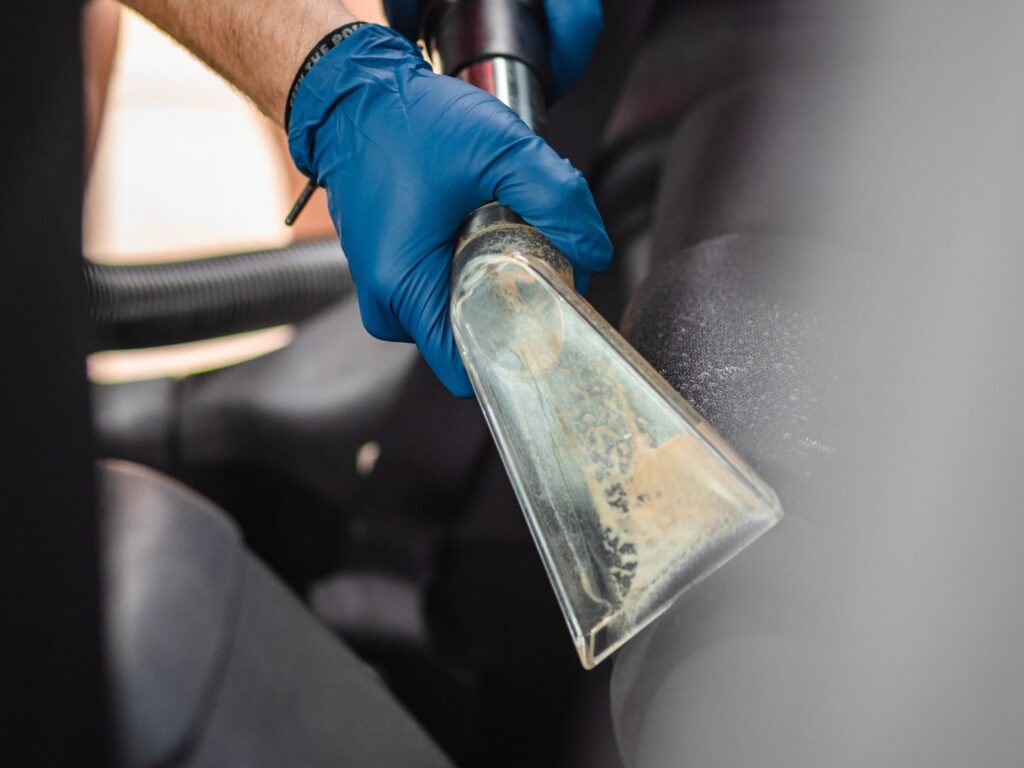
Dirt and ground-in grime accumulate in the carpets and floor mats of any vehicle, but especially those whose owners are outdoors regularly or live in dusty areas like Wichita. Regular vacuuming removes surface dirt, but ground-in grime may require Carpet and Upholstery Extraction to address embedded contamination.
Ink or dye stains from pens, markers, or transferred dye from clothing are challenging because the staining agents can be stubborn. Avoid applying strong solvents without checking their compatibility with the upholstery. An automotive cleaner designed for the material may help, but some stains require professional attention. Always test cleaning products on a hidden area first.
Food stains like chocolate, grease, or sauce require different approaches depending on the type of food and the fabric. Remove excess residue gently before using an appropriate automotive upholstery cleaner. Greasy stains may need a product designed for oils, while sugary spills should be addressed promptly to prevent sticky buildup. Avoid aggressive scrubbing or soaking the material.
When DIY Cleaning Isn’t Enough
Some stains and odors are beyond the scope of home cleanup for good reasons. Attempting to remove them yourself can damage upholstery or push contaminants deeper into the carpet.
Old, set-in stains that have dried into fabric fibers often can’t be lifted by spot-cleaning alone. The longer a stain sits, the harder it may be to remove. Professional extraction equipment and suitable cleaning solutions can address some stains that ordinary cleaning cannot.
Pet odors and urine accidents that have soaked into the carpet padding underneath the visible carpet can be difficult to eliminate through surface cleaning alone. Professional assessment can help determine whether deeper extraction, targeted odor treatment, or replacement of affected materials is necessary.
Mold and mildew may indicate moisture trapped in the upholstery or carpet, a problem that regular cleaning won’t necessarily solve. The source of moisture must be identified and addressed. Significant mold contamination may require specialist remediation rather than routine detailing.
Cigarette smoke odor is notoriously stubborn because residue can accumulate on interior surfaces, fabrics, and ventilation components. Airing out the vehicle and using odor-absorbing products may help temporarily, but deeper cleaning is often necessary. Professional treatments, including O-Zone Treatment when appropriate, may help reduce lingering odors after the underlying source has been addressed.
Preventive Measures: Easier Than Removal
The simplest stain removal is prevention. Keeping food and beverages outside the vehicle, using seat covers or protective mats, and vacuuming regularly all reduce the risk of stains and odors.
For vehicle owners with pets, waterproof seat covers designed for the back seat can help protect upholstery from accidents. These are removable and washable, making pet-related protection straightforward.
For those living in Wichita’s dusty climate, floor mats designed to trap dirt help prevent ground-in grime from accumulating in the carpet. Shaking out or vacuuming these mats regularly keeps dirt from being worked deeper into the fibers.
Professional Interior Detailing for Stubborn Stains
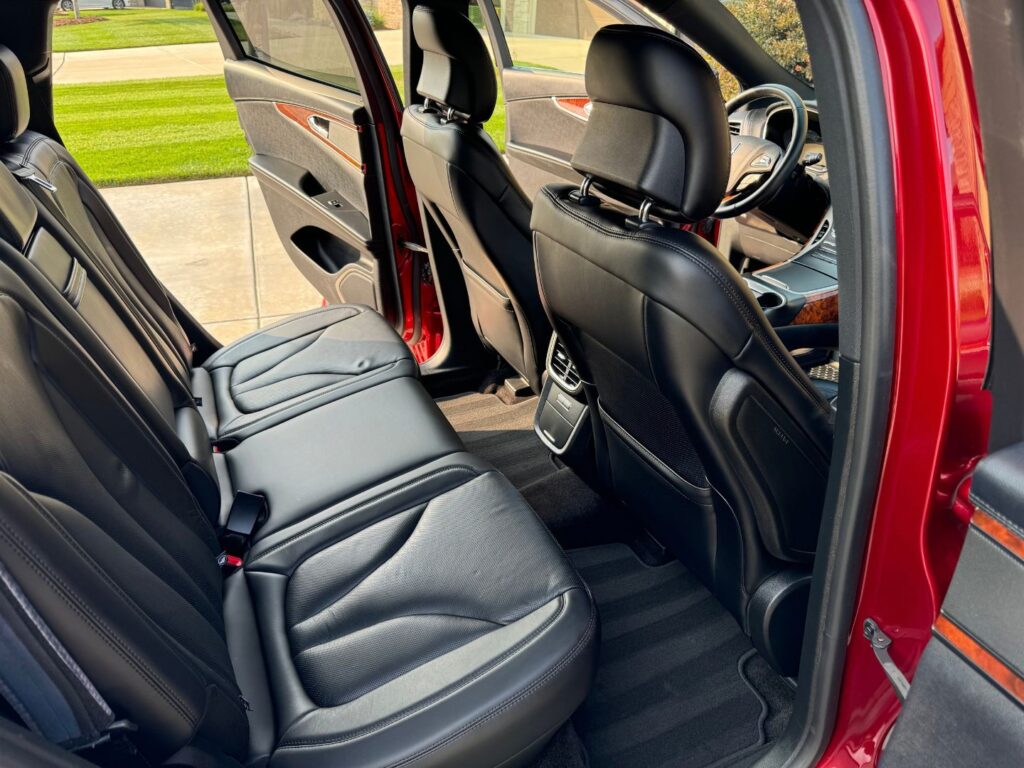
Professional Interior Detailing can address interior contamination that ordinary cleaning may not fully remove. However, deeper stains and odors sometimes require specialized services rather than standard surface cleaning.
Carpet and Upholstery Extraction uses cleaning solutions and suction equipment to lift embedded dirt from carpets and fabric surfaces. It can help address some spills, pet accidents, and stubborn stains, although results depend on the material and how long the contamination has been present.
For persistent odors, additional services such as O-Zone Treatment may be considered after the odor source has been identified and cleaned. Ozone treatment is not a replacement for removing contaminated materials or resolving moisture problems, and it must be performed with appropriate safety precautions.
RP Auto Detailing ICT offers professional Interior Detailing and specialized cleaning services for vehicles with stubborn stains or odors. Carpet and Upholstery Extraction is performed in-shop, and specialized treatments should be discussed separately when arranging service.
Addressing Odors at the Source
Some car odors aren’t from visible stains at all. Musty smells may indicate moisture in the vehicle. Food odors from spilled milk or forgotten lunch items can linger even after the food is removed. Air fresheners mask odors but don’t eliminate the source.
Addressing the actual cause, whether that’s trapped moisture, spilled food, or contaminated upholstery, is more effective than covering it up. If moisture is the issue, check for leaks around windows, doors, and the sunroof rather than relying on ventilation alone.
If food or beverage spills are the culprit, cleaning the affected area thoroughly, including any seepage into carpets or under seats, helps address the source. Some situations require professional access to areas that routine cleaning cannot reach.
Your Interior, Restored
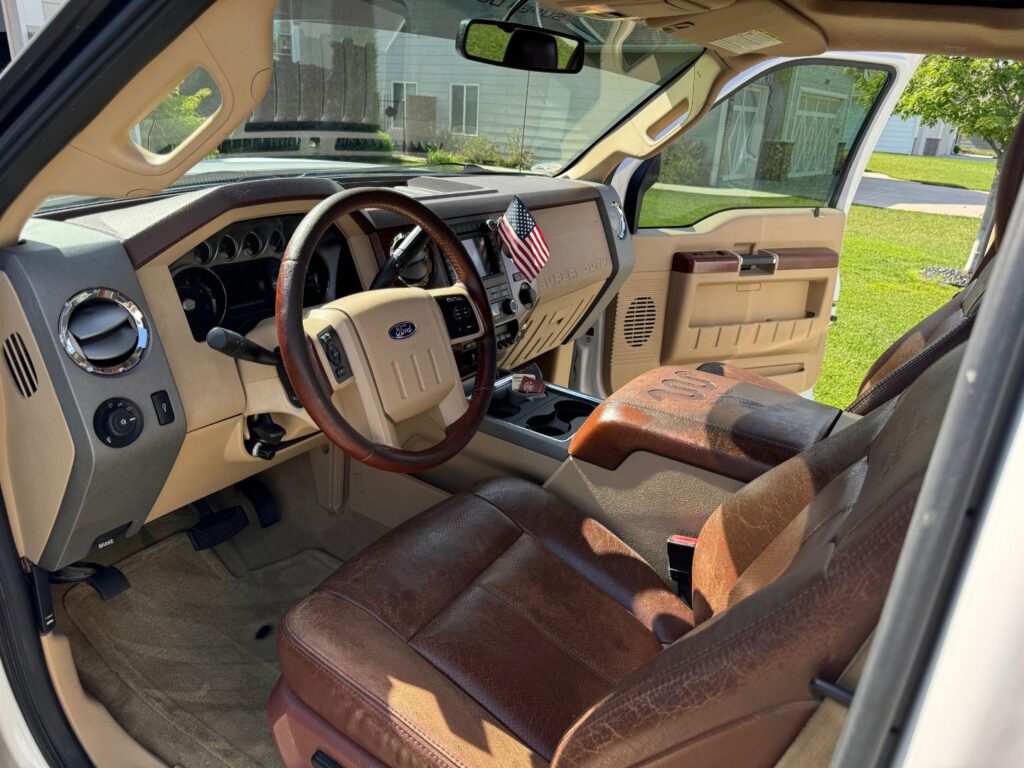
Interior stains and odors make a vehicle feel less pleasant to drive and spend time in. Some are simple to address at home. Others, especially set-in stains, deep odors, or contamination requiring extraction-level cleaning, benefit from professional attention.
For Wichita vehicle owners dealing with stubborn interior issues, RP Auto Detailing ICT can assess the situation and recommend appropriate cleaning options. Whether you’ve tried home remedies or prefer professional treatment from the start, the goal is the same: a cleaner, fresher interior you can enjoy.
Frequently Asked Questions
Can all stains be removed from car upholstery?
Not every stain can be completely removed. Results depend on the cause, how long the stain has been present, and the upholstery material. Many stains can be improved through professional cleaning, but deeply set stains or permanent discoloration may remain.
What’s the best way to remove pet odors from a car?
For fresh pet accidents, an enzymatic cleaner suitable for the material can help address odor-causing residue. For deeper contamination, professional extraction or targeted odor treatment may be needed. Cleaning the actual source is essential for lasting improvement.
Is baking soda or vinegar effective for car interior odors?
Baking soda may help absorb some surface-level odors, while diluted vinegar is sometimes used for cleaning compatible materials. However, vinegar isn’t appropriate for every automotive surface. Neither method reliably resolves odors caused by contamination deep in carpets or upholstery.
How can I prevent stains in my car interior?
Keeping food and drinks outside the vehicle, using protective seat covers for pets, and vacuuming regularly all help. Address spills promptly before they set in, and use cleaning products appropriate for your interior materials.
Can deep car carpet stains be removed without replacing the carpet?
Sometimes. Professional Carpet and Upholstery Extraction can improve many embedded stains, depending on their cause and severity. However, contamination that has permanently damaged the fibers or penetrated deeply into the padding may require additional treatment or material replacement.
Choosing the Right Approach for Interior Stains
Some interior problems respond well to careful home cleaning, while others need specialized equipment or professional assessment. Identifying the type of stain or odor before choosing a treatment helps avoid unnecessary damage.
If stubborn stains or unpleasant odors are affecting your vehicle, contact RP Auto Detailing ICT at (316) 655-3741 or visit the Interior Detailing service page to explore available services in Wichita, KS.